By Akia Thrower
A new study reveals how gray wolves in Isle Royale National Park seasonally alter their habitat preferences to align with beavers’ habitat preferences, a shift that might have implications for the island’s ecosystem.
The post Wolves hunt beavers in Isle Royale National Park, changing the ecosystem first appeared on Great Lakes Echo.By Akia Thrower
A new study reveals how gray wolves in Isle Royale National Park seasonally alter their habitat preferences to align with beavers’ habitat preferences, a shift that might have implications for the island’s ecosystem.
The post Wolves hunt beavers in Isle Royale National Park, changing the ecosystem first appeared on Great Lakes Echo.By Kyrmyzy Turebayeva
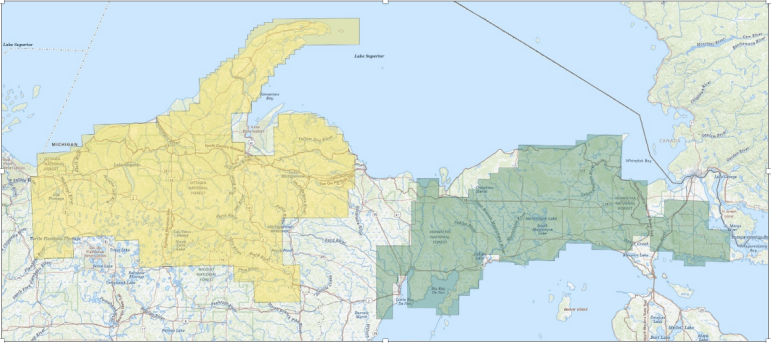
The U.S. Geological Survey has began large-scale low-level airplane flights over Michigan's Upper Peninsula and northern Wisconsin to obtain high-resolution data on subsurface mineral structures and bedrock composition. The data will be used to create two- and three-dimensional maps to better understand the geological structure at depths of about 10,000 feet.
The post Scientists update geological map of northern Wisconsin, Michigan’s Upper Peninsula first appeared on Great Lakes Echo.By Kyrmyzy Turebayeva
The U.S. Geological Survey has began large-scale low-level airplane flights over Michigan's Upper Peninsula and northern Wisconsin to obtain high-resolution data on subsurface mineral structures and bedrock composition. The data will be used to create two- and three-dimensional maps to better understand the geological structure at depths of about 10,000 feet.
The post Scientists update geological map of northern Wisconsin, Michigan’s Upper Peninsula first appeared on Great Lakes Echo.By Ada Tussing
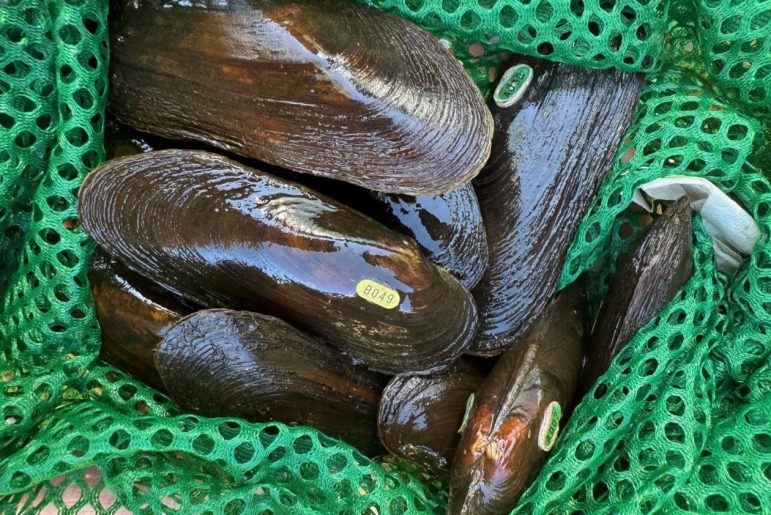
To combat the population loss of spectaclecase mussels, researchers with both the Minnesota and the Wisconsin Department of Natural Resources released over 177 mussels into the Chippewa River in Northwest Wisconsin.
The post Endangered spectaclecase mussels reintroduced into the Chippewa River first appeared on Great Lakes Echo.By Ada Tussing
To combat the population loss of spectaclecase mussels, researchers with both the Minnesota and the Wisconsin Department of Natural Resources released over 177 mussels into the Chippewa River in Northwest Wisconsin.
The post Endangered spectaclecase mussels reintroduced into the Chippewa River first appeared on Great Lakes Echo.By Kyrmyzy Turebayeva
In the late 1970s, when most wildlife conservation programs in the United States focused almost exclusively on game species, a quiet but historic shift began in Minnesota. It was here that one of the nation’s first state programs dedicated to protecting so-called nongame wildlife emerged from butterflies and bats to bald eagles and river otters. That story is now told in detail by Carrol Henderson in his new book, “A National Legacy: Fifty Years of Nongame Wildlife Conservation in Minnesota."
The post From otters to butterflies: How Minnesota became a pioneer in nongame wildlife conservation first appeared on Great Lakes Echo.By Kyrmyzy Turebayeva
In the late 1970s, when most wildlife conservation programs in the United States focused almost exclusively on game species, a quiet but historic shift began in Minnesota. It was here that one of the nation’s first state programs dedicated to protecting so-called nongame wildlife emerged from butterflies and bats to bald eagles and river otters. That story is now told in detail by Carrol Henderson in his new book, “A National Legacy: Fifty Years of Nongame Wildlife Conservation in Minnesota."
The post From otters to butterflies: How Minnesota became a pioneer in nongame wildlife conservation first appeared on Great Lakes Echo.By Anna Ironside
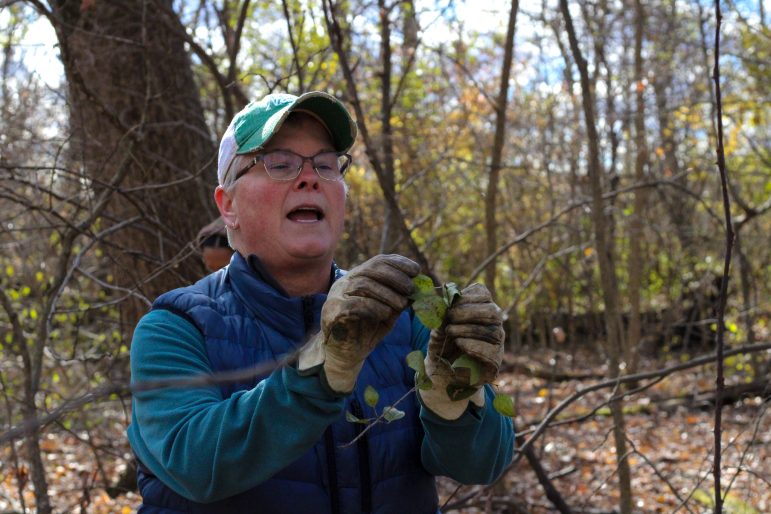
Caroline Miller is a botanical technologist at Michigan State University’s W.J. Beal Botanical Garden, as well as a master’s student. Her work has made her a driving force behind restoration projects on campus and beyond. From invasive species removal days to a growing movement to replace traditional turf lawns with native landscapes, Miller doesn’t quit.
The post Invasive species expert teaches volunteers to overcome ‘plant blindness’ first appeared on Great Lakes Echo.By Anna Ironside
Caroline Miller is a botanical technologist at Michigan State University’s W.J. Beal Botanical Garden, as well as a master’s student. Her work has made her a driving force behind restoration projects on campus and beyond. From invasive species removal days to a growing movement to replace traditional turf lawns with native landscapes, Miller doesn’t quit.
The post Invasive species expert teaches volunteers to overcome ‘plant blindness’ first appeared on Great Lakes Echo.