By Victoria Witke
Wildfire risk is high in the upper Great Lakes, and research shows that large, scorching wildfires spell trouble for lakes in the region’s remote watersheds.
By Elizabeth McGowan
Researchers are exploring a new approach to controlling invasive sea lamprey populations: Chemicals that disrupt pheromones rather than lampricide.
By Isabella Figueroa Nogueira
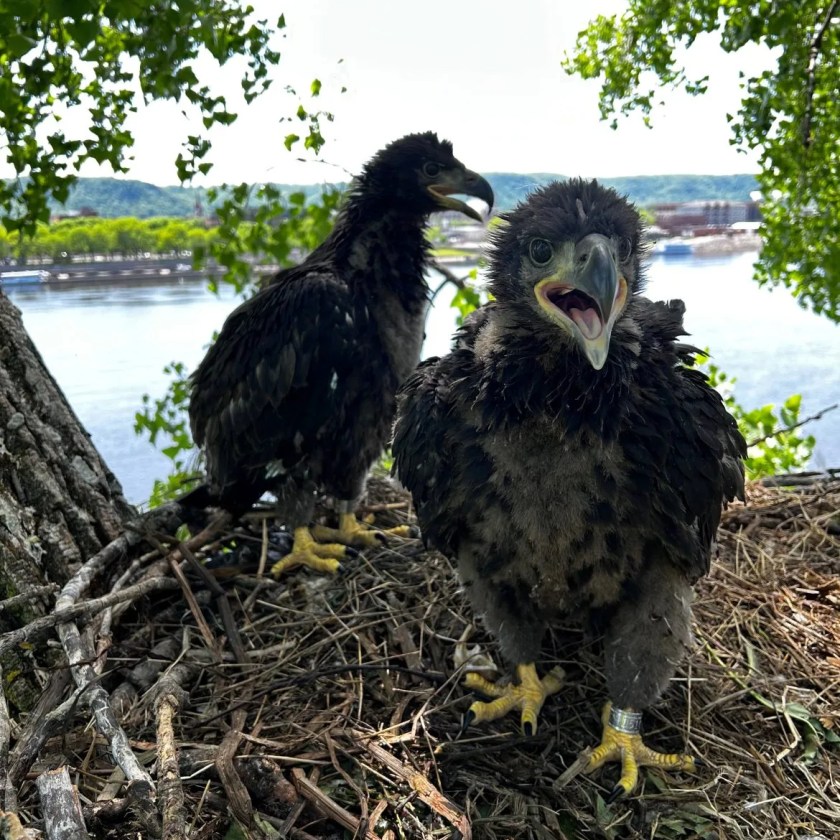
The number of bald eagles in Michigan is declining. Workers are finding empty and damaged nests, malnourished eaglets and adult bald eagles attempting to nest a second time after failed attempts. Funding delays aren't helping.
A new 66-foot-long research vessel built to support fish and wildlife studies on the Great Lakes is entering its final phase of testing before delivery to the Michigan Department of […]
The Minnesota Department of Natural Resources certified nine new state-record fish this spring, including records for species such as lake trout, lake sturgeon, bluegill, black crappie, and bigmouth buffalo. Seven […]
A fertilizer spill from an agricultural operation caused a significant fish kill in a tributary that flows into Lake Michigan, prompting an investigation by state environmental officials. According to the […]
The state of Michigan has released annual consumption guidelines for eating locally caught fish, based on the levels of chemicals found in the portions of fish people eat. Read the […]
Michigan officials are treating a river to control invasive sea lamprey larvae, a parasitic fish that attaches to other fish and feeds on their blood and body fluids, causing major […]
The U.S. Fish and Wildlife Service will survey Michigan’s Long Lake Outlet–Devils Lake tributary to estimate sea lamprey populations and determine whether additional control measures are needed. Sea lampreys are […]
By Eric Freedman
Scientists now have evidence that yet another invasive aquatic species -- the bloody red shrimp -- is established in all five Great Lakes.
By Riley Wilson
Ice covering the Great Lakes stores organic carbon, which is released in a burst during spring melt. As climate change reduces ice cover, researchers say this seasonal surge of energy may be shrinking, with uncertain consequences for these freshwater systems.