By Eric Freedman
Empty lots in deindustrialized cities like Detroit may contribute to bird species diversity, says a new study by researchers at MSU and Carleton University in Canada. The study is based on sound recordings collected at 110 sites in 11 Detroit neighborhoods. The study recommends that vacant land management in the city takes a balanced approach that considers the needs of both residents and birds. There are other concerns about vacant land, too, including as sites for solar arrays.
The post Vacant lots boost diversity among Detroit’s birds, study finds first appeared on Great Lakes Echo.By Eric Freedman
Empty lots in deindustrialized cities like Detroit may contribute to bird species diversity, says a new study by researchers at MSU and Carleton University in Canada. The study is based on sound recordings collected at 110 sites in 11 Detroit neighborhoods. The study recommends that vacant land management in the city takes a balanced approach that considers the needs of both residents and birds. There are other concerns about vacant land, too, including as sites for solar arrays.
The post Vacant lots boost diversity among Detroit’s birds, study finds first appeared on Great Lakes Echo.By Akia Thrower
A new study reveals how gray wolves in Isle Royale National Park seasonally alter their habitat preferences to align with beavers’ habitat preferences, a shift that might have implications for the island’s ecosystem.
The post Wolves hunt beavers in Isle Royale National Park, changing the ecosystem first appeared on Great Lakes Echo.By Akia Thrower
A new study reveals how gray wolves in Isle Royale National Park seasonally alter their habitat preferences to align with beavers’ habitat preferences, a shift that might have implications for the island’s ecosystem.
The post Wolves hunt beavers in Isle Royale National Park, changing the ecosystem first appeared on Great Lakes Echo.By Clara Lincolnhol
New research says workers picking, grinding and packaging cannabis are developing workplace-related asthma, and two deaths have occurred so far.
The post Cannabis workers are developing job-related asthma and some have died, study says first appeared on Great Lakes Echo.By Clara Lincolnhol
New research says workers picking, grinding and packaging cannabis are developing workplace-related asthma, and two deaths have occurred so far.
The post Cannabis workers are developing job-related asthma and some have died, study says first appeared on Great Lakes Echo.By Ada Tussing
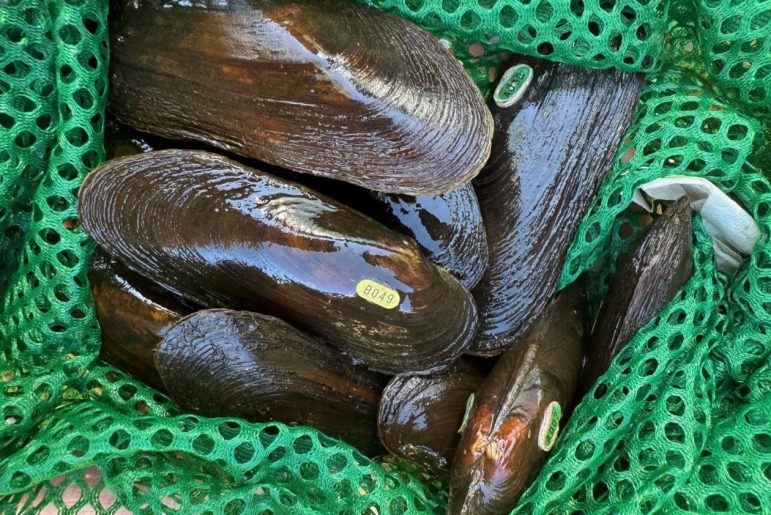
To combat the population loss of spectaclecase mussels, researchers with both the Minnesota and the Wisconsin Department of Natural Resources released over 177 mussels into the Chippewa River in Northwest Wisconsin.
The post Endangered spectaclecase mussels reintroduced into the Chippewa River first appeared on Great Lakes Echo.By Ada Tussing
To combat the population loss of spectaclecase mussels, researchers with both the Minnesota and the Wisconsin Department of Natural Resources released over 177 mussels into the Chippewa River in Northwest Wisconsin.
The post Endangered spectaclecase mussels reintroduced into the Chippewa River first appeared on Great Lakes Echo.By Kyrmyzy Turebayeva
In the late 1970s, when most wildlife conservation programs in the United States focused almost exclusively on game species, a quiet but historic shift began in Minnesota. It was here that one of the nation’s first state programs dedicated to protecting so-called nongame wildlife emerged from butterflies and bats to bald eagles and river otters. That story is now told in detail by Carrol Henderson in his new book, “A National Legacy: Fifty Years of Nongame Wildlife Conservation in Minnesota."
The post From otters to butterflies: How Minnesota became a pioneer in nongame wildlife conservation first appeared on Great Lakes Echo.By Kyrmyzy Turebayeva
In the late 1970s, when most wildlife conservation programs in the United States focused almost exclusively on game species, a quiet but historic shift began in Minnesota. It was here that one of the nation’s first state programs dedicated to protecting so-called nongame wildlife emerged from butterflies and bats to bald eagles and river otters. That story is now told in detail by Carrol Henderson in his new book, “A National Legacy: Fifty Years of Nongame Wildlife Conservation in Minnesota."
The post From otters to butterflies: How Minnesota became a pioneer in nongame wildlife conservation first appeared on Great Lakes Echo.