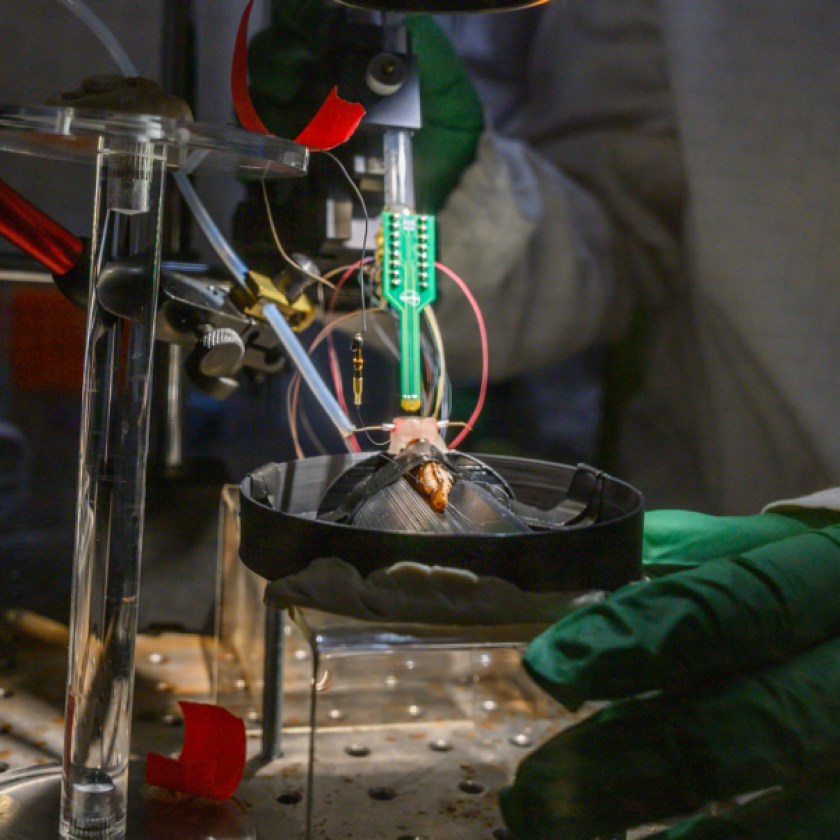

Researchers at Michigan State University are exploring an unexpected new tool that could reshape how scientists detect so-called forever chemicals in lakes, rivers and wetlands across the Great Lakes. Scientists have discovered that locusts can sniff out PFAS contaminants down to parts per trillion, a level of detection far beyond
Three new wetlands will be unveiled in Whitby, Ontario, thanks to a $1.5 million investment from the province and a partnership with Ducks Unlimited Canada. These wetlands receive water from […]
By Anna Barnes
The Michigan Department of Natural Resources is asking the public to stop harassing the threatened eastern massasauga rattlesnake - the only native venomous snake in the state.
By Demonte Thomas
The Mid-Michigan Land Conservancy will make its Ionia Natural Area Trail available to the public in October.
By Akia Thrower
Michigan’s annual budget includes $2 million for wetland conservation efforts by the state Department of Natural Resources, funding critical work for endangered bird species.
The For Our Youth (FOY) horticulture club was thrilled to have a warm, sunny day to gather for our June meeting at the McLarty Centre. We had to cancel last year’s meeting due to thunder and lightning, so we were extra glad to be back at this wonderful outdoor learning
By Bauyrzhan Zhaxylykov
Surrounded by busy roads, neighborhoods and businesses, Ken-O-Sha Park doesn’t look like one of Michigan’s most valuable forests. But a new study found the 100-acre park in Grand Rapids is home to one of the state’s highest-quality remaining forests.
By Kyrmyzy Turebayeva
Downriver Detroit developed during the 20th century as an industrial region, but it was never just an industrial space. Alongside factories and working-class neighborhoods, there were wetlands, waterfront areas, nature preserves, farms and residential communities with different types of environments that shaped the region. This relationship lies at
The U.S. Fish and Wildlife Service Migratory Bird Conservation Commission recently granted numerous partners $9 million in North American Wetlands Conservation Act funds. The money will benefit three programs in […]
By Domonic Marroni
In Ann Arbor, Michigan, Skyline High School's natural areas are home to several species of invasive plants causing widespread destruction of surrounding trees. These species pose potential fire hazards and are dangerous to public health. Action is needed, say several environmental experts, to avert future disasters and
By Kyrmyzy Turebayeva
While urbanization continues to displace natural ecosystems across the Great Lakes region, one declining wetland bird has managed to adapt to city life -- the black-crowned night heron.